

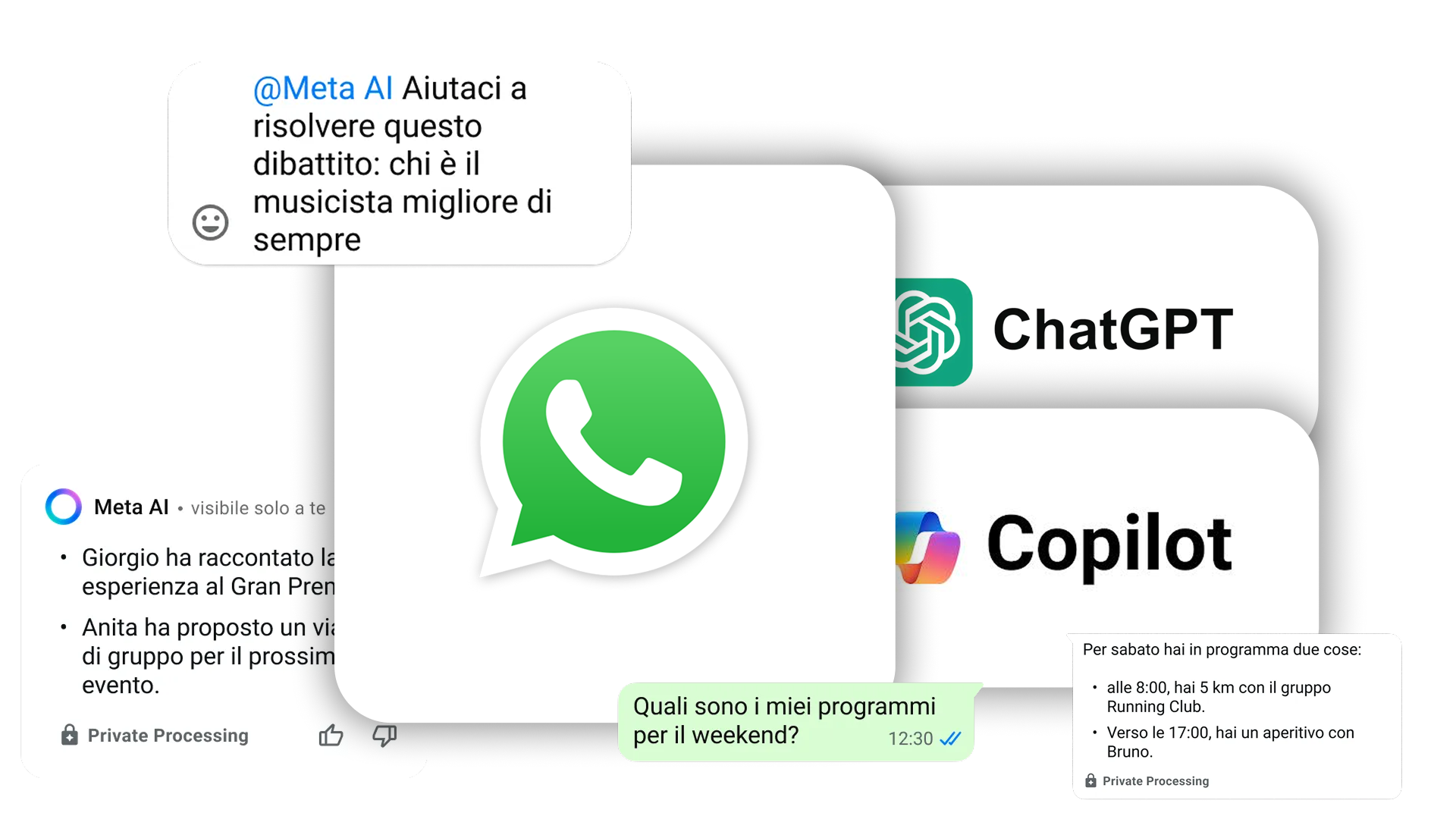
Meta, the parent company of WhatsApp, has introduced significant changes to its business solution terms, outlining a future where the messaging ecosystem will be dominated by its own proprietary artificial intelligence assistant. The new clauses prohibit the distribution of third-party AI chatbot services as a primary feature on the platform. This move will progressively force major competitors like ChatGPT from OpenAI and Copilot from Microsoft to abandon the WhatsApp environment. This exclusivity strategy, aimed at solidifying the position of Meta AI, has immediately raised industry concerns, leading to intervention by competition authorities.
Key Takeaways
- WhatsApp Bans Competitors: Meta updated its Business Solution Terms, prohibiting the distribution of third-party AI chatbots (like ChatGPT and Copilot) as a primary service.
- Exclusivity for Meta AI: The move aims to secure exclusivity for the proprietary assistant, Meta AI, within the messaging platform.
- Antitrust Investigation: The Italian Competition Authority (AGCM) has opened an inquiry into alleged abuse of dominant position (Article 102 TFEU), fearing a limitation on competition and consumer choice.
The New Rules of the WhatsApp Business API
The update to the “WhatsApp Business Solution Terms” is at the core of the controversy. The changes stipulate that the use of the Business API to offer conversational AI services must be progressively discontinued if the service is not owned or authorized by Meta. In effect, the company is exerting control over which AI tools can directly interact with its vast business and consumer user base—a control that appears not to extend to other service integrations but is strictly aimed at general-purpose AI chatbots.
The Deadline and the Exit of External Chatbots
The new provisions are not immediately enforceable, but they set a clear deadline. Competing conversational AI services will have until January 15, 2026, to comply or, more likely, cease their operations within WhatsApp. This date marks the final term for the use of popular tools like ChatGPT and Copilot via current business integrations, effectively clearing the path for Meta’s internal solution.
Meta’s Strategy: Consolidating the Proprietary Ecosystem (Meta AI)
This decision is a clear manifestation of Meta’s strategy to position Meta AI not just as a complementary product, but as the default AI solution within its ecosystem (including Facebook, Instagram, and WhatsApp). With a user base of over two billion, WhatsApp represents an unparalleled distribution platform for any service. By restricting access to competitors, Meta ensures that any future AI interaction on the platform generates data and traffic solely towards its own models.
Implications for Users and Businesses
For users, this move reduces the range of choice and the diversity of AI models directly accessible from WhatsApp. For businesses, the impact is more critical. Many companies, large and small, rely on the WhatsApp Business API to offer automated, personalized customer support, often using cutting-edge models from OpenAI or other providers. These businesses will be forced to migrate their AI services to Meta’s infrastructure or develop alternative solutions to maintain customer interaction on the platform.
The Intervention of the Italian Antitrust Authority for Abuse of Dominant Position
The reaction from regulatory authorities was swift. The Italian Competition Authority (AGCM) has initiated a preliminary investigation against Meta for alleged abuse of dominant position, a severe infringement under Article 102 of the Treaty on the Functioning of the European Union (TFEU). The AGCM fears that the forced exclusion of ChatGPT and Copilot is not a simple technical adjustment but an anti-competitive restriction.
Risks to Competition and Consumer Choice
The inquiry focuses on the risk that Meta’s maneuver could limit innovation and competition in the AI assistant sector, especially in Italy where WhatsApp usage is widespread. The AGCM will assess whether Meta is leveraging its dominant position in the messaging market to impose conditions that penalize competitors and, consequently, restrict the choice and benefits offered to consumers, granting an unfair and unsustainable advantage to Meta AI.