

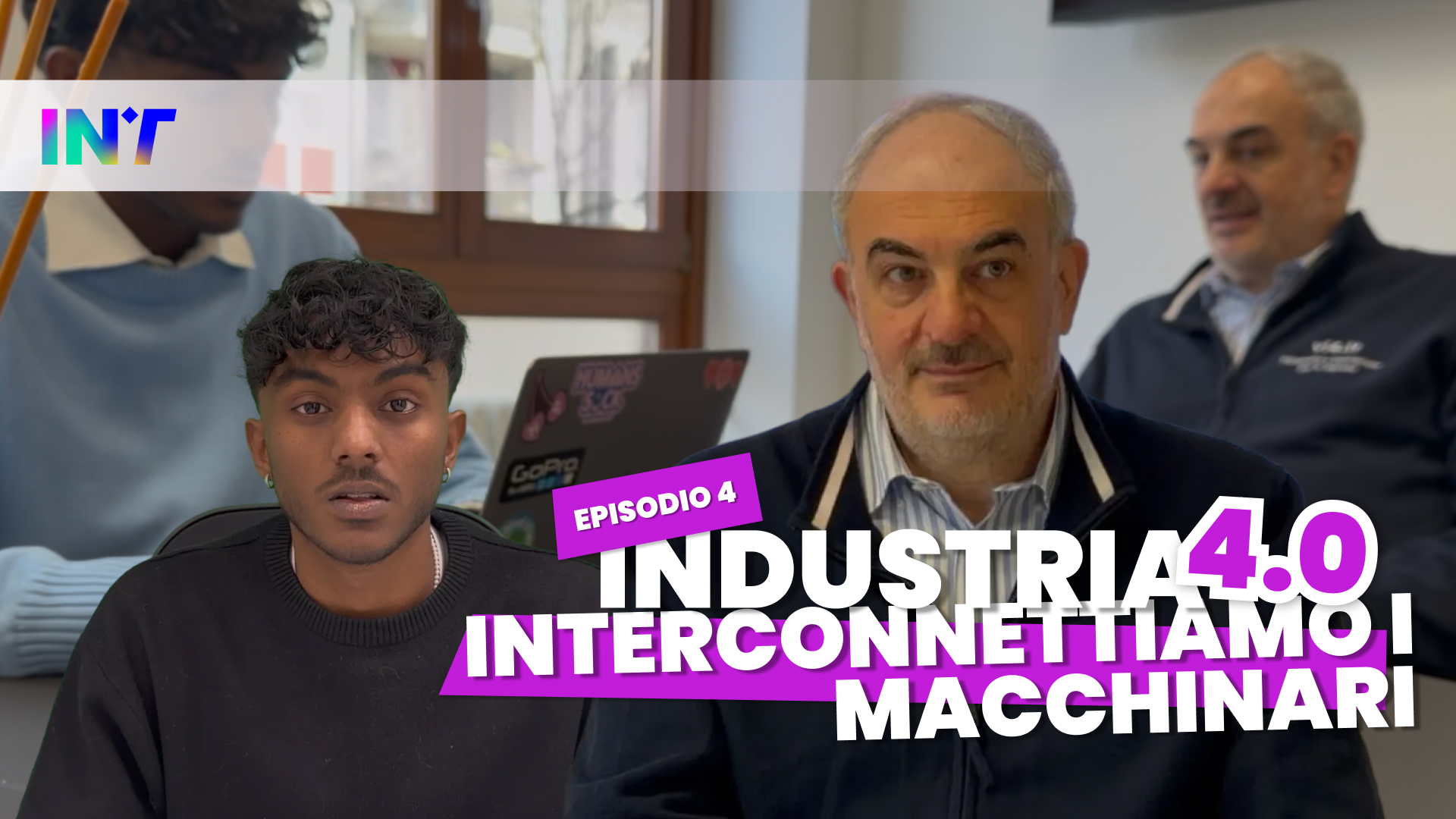
Facing the complexity of the digital transition, Italian micro and small enterprises often find themselves at a crossroads: innovate or be excluded from the market, Industry 4.0 and 5.0. In the fourth episode of our interview series, we met with Rino Entrieri, CEO and Founder of Geco 5.0, to understand how technology can become a practical ally even for the smallest production facilities.
The Core of the Interview: Beyond Automation
While Industry 4.0 introduced us to the concept of automated machinery, the real revolution today lies in interconnection. Rino Entrieri emphasizes how the shift to the 5.0 paradigm focuses not just on efficiency, but on the ability of machines to “talk” to each other and to people, integrating essential aspects such as sustainability and security.
“The entrepreneur who started as a craftsman and now runs a small company doesn’t have time to babysit complex software. They need simple tools that allow them to do their job while harnessing the power of digitalization.”
The 3 Challenges of the Future of Production
During our conversation, three pillars emerged that will define corporate competitiveness in the coming years:
- Energy and Entrepreneurial Sustainability: Optimizing consumption is no longer just an ethical choice, but an economic necessity.
- Cyber Security: As factories become increasingly connected, protecting data and machine operations becomes crucial to preventing accidents and production downtime.
- The New Machinery Regulation: Entrieri warned us about upcoming regulatory deadlines. Starting January 20, 2027, the new European regulation will become mandatory, introducing very specific requirements regarding the cybersecurity of machinery. Industry 4.0 and 5.0: Innovation that Speaks the Language of Small Businesses
Geco 5.0: A Solution Born in the Field
The genesis of Geco 5.0 is particularly interesting, born almost as a challenge during the COVID-19 period. Starting from simple Excel spreadsheets—the tool most loved by SMEs—Entrieri developed a modular and scalable system. This allows businesses with as few as 3 or 5 machines to obtain CE marking and access government funding without overturning their established way of working.
Watch the Full Interview
Want to find out how to prepare your company for 2027 and learn about the advantages of distributed computing? Watch the full video at the top of the article.