


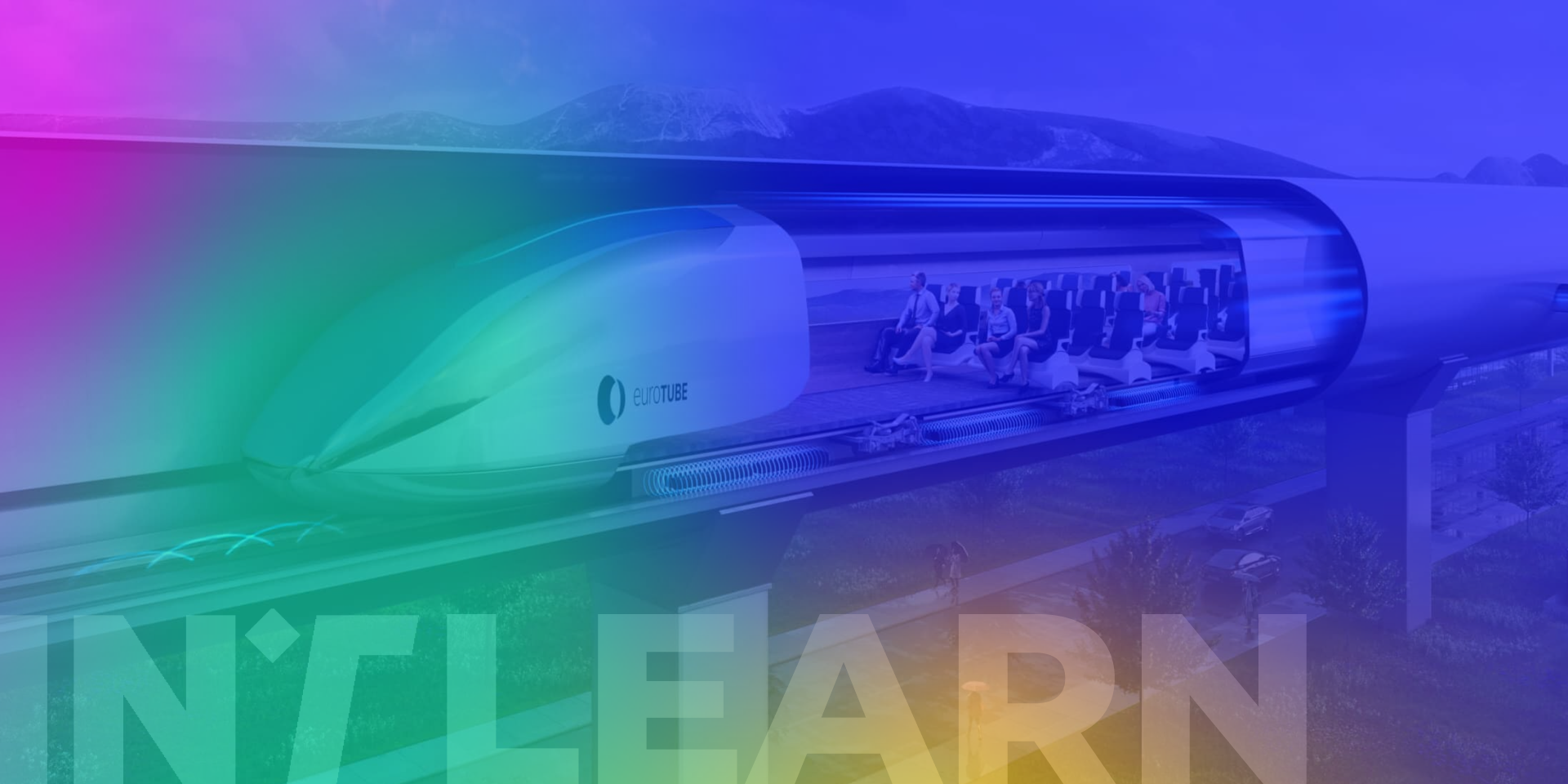
Hyperloop is a high-speed ground transport system designed to move passenger or cargo capsules inside low-pressure tubes. The concept, popularized by Elon Musk’s 2013 White Paper, aims to combine the speed of an airplane with the convenience of a train, almost totally eliminating aerodynamic drag and rolling resistance.
Key Takeaways
- Target Speed: Over 1000 km/h (theoretical).
- Key Technology: Depressurized tubes (near-vacuum) and magnetic levitation.
- Goal: Connect cities hundreds of kilometers apart in just a few dozen minutes.
What exactly is Hyperloop
Technically, Hyperloop belongs to the family of vactrains (vacuum trains), an idea theorized as early as the beginning of the 20th century but never realized on a commercial scale. Unlike traditional trains, the system does not move on open-air tracks, but inside a sealed tubular infrastructure.
Inside these tubes, the environment is maintained at extremely low pressure (about 100 Pascals in the original Alpha design), simulating conditions that an airplane encounters at high altitudes. This allows the capsules, called pods, to move with minimal air resistance, making the system energy-efficient for high speeds. Although several companies have attempted to commercialize it (with mixed fortunes, such as the closure of Hyperloop One), research continues in specialized centers like the European Hyperloop Center.
How Hyperloop technology works
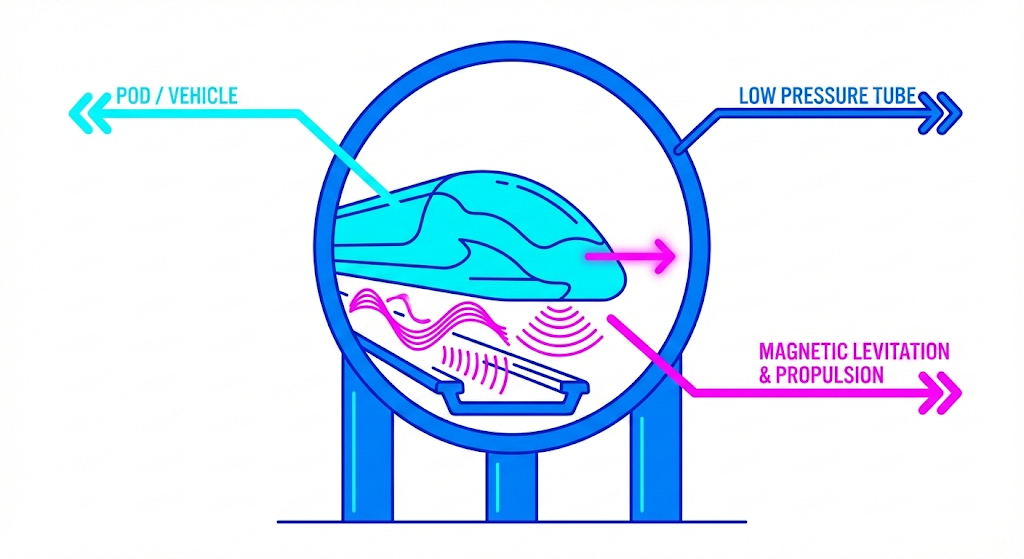
The operation of Hyperloop is based on the synergy of three fundamental engineering components, described in SpaceX and NASA technical documents:
- Low-Pressure Tube: The infrastructure consists of steel tubes positioned on pylons (to reduce land acquisition costs and seismic impact) or buried underground. Vacuum pumps extract most of the air to minimize friction.
- Magnetic Levitation: The pods never touch the surface during the run. They use magnetic levitation technologies (Maglev) or air bearings (in the original design) to eliminate mechanical friction. More recent iterations favor passive magnetic levitation (Inductrack) for stability and efficiency.
- Electric Propulsion: Linear induction motors, positioned along the tube or on the pod itself, accelerate and decelerate the vehicle electromagnetically, without moving parts in contact.
Advantages and potential applications
The adoption of a system like Hyperloop would offer significant strategic advantages over current means. The first is speed: being theoretically able to reach 1200 km/h, it would drastically reduce intercity travel times (e.g., Milan-Rome in 30 minutes).
Furthermore, the system is designed to be immune to weather conditions, as it is protected inside the tube, and potentially energy-autonomous if covered with solar panels. Applications range from high-frequency passenger transport to rapid cargo logistics, decongesting highways and air traffic.
Technical challenges and state of the art
Despite the potential, the realization of Hyperloop faces enormous engineering obstacles. Maintaining a vacuum over hundreds of kilometers of piping requires perfect airtight joints and redundant safety systems for rapid depressurization in case of emergency.
Currently, the technology is in an advanced R&D phase. While in the USA initial enthusiasm has cooled with the halt of some commercial players, in Europe and Asia, small-scale tests continue to validate the safety of levitation systems and thermal management at high speeds.